
Blog
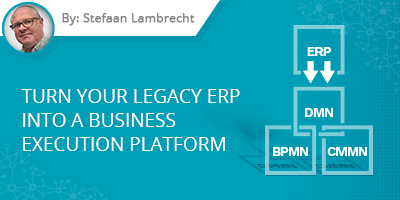
Turn Your Legacy ERP into a Business Execution Platform
Using Decision/Case/Process Modeling & Execution
Read Time: 5 Minutes
From “Best Practice” to “Adaptive Practice”
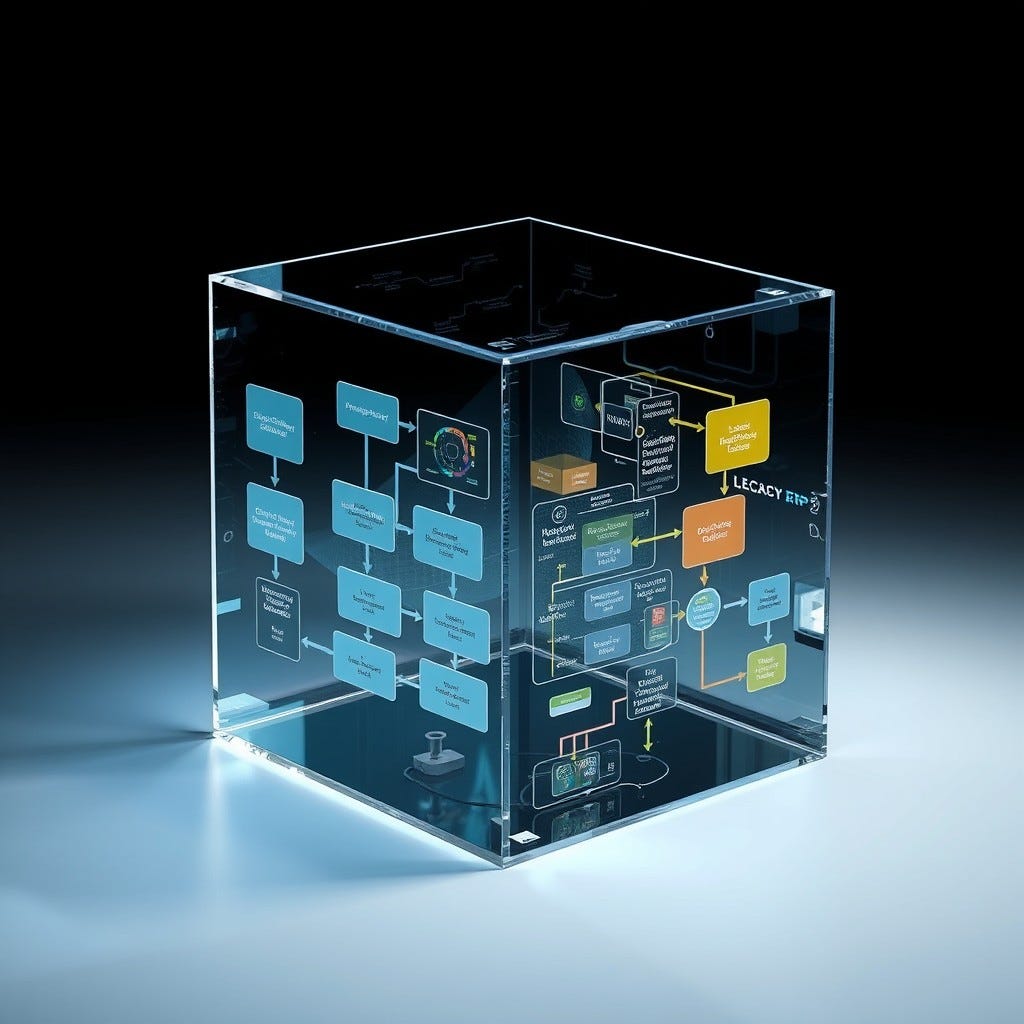
Traditional ERP systems were designed around stability and standardization, not adaptability. Vendors like SAP, Oracle, and JD Edwards codified “best practices” — in reality, average practices that could be applied across industries.
While this provided efficiency and compliance, it came at the cost of differentiation. Any company trying to do something innovative or non-standard hit the walls of ERP rigidity — requiring custom IT code, long projects, and high development and maintenance costs (the legacy trap).
The future ERP shouldn’t impose “best practices”; it should enable continuous adaptation to how your business actually operates — and evolves.
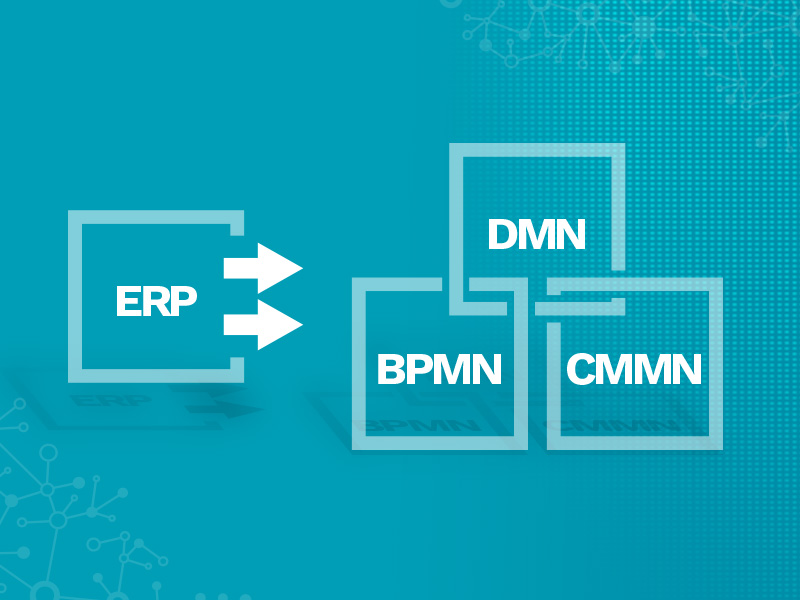
Model-Driven Execution: The CMMN–BPMN–DMN Tripod
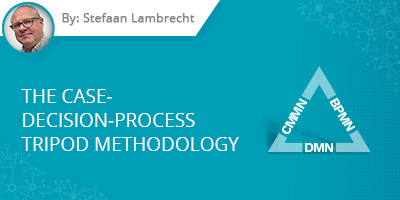
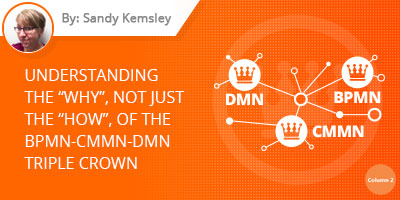
The proposed shift to CMMN (Case Management Model and Notation), BPMN (Business Process Model and Notation), and DMN (Decision Model and Notation) is profound.
- CMMN: captures flexible, event-driven, end-to-end business fulfillment, including process & task orchestration.
- BPMN: captures structured, repeatable process flows.
- DMN: formalizes decision logic and business rules in an understandable and executable way.
Together, they create a semantic model of the business — not just documentation, but executable logic that an engine can run directly.
And most importantly, the models are developed by the business, not IT. The business owners and experts return to the steering wheel of their own business organization.
This is the cornerstone of a “business-defined, engine-driven architecture” — where models become the application itself.
Closing the Business–IT Gap
In traditional ERP, business analysts describe needs → IT interprets → developers code → business tests → IT fixes → repeat.
In model-driven architectures, the models are the requirements — and also the implementation.That means:
- Business users can simulate and test processes and decision logic themselves.
- Changes can be validated immediately.
- Governance improves dramatically, since models are transparent and explainable.
- The “black box” effect of code disappears — models are inherently visual and traceable.
Composable Capability Architecture
A next-gen ERP wouldn’t be a monolith. Instead, it would be a composable set of capabilities:
- Case models (CMMN)
- Process models (BPMN)
- Decision models (DMN)
- UI components (low-code or no-code)
- Data services and integrations
The ERP becomes an application fabric, where processes, rules, and data are dynamically orchestrated rather than hard-coded.
This allows an organization to tailor specific processes (say, a unique claims process in insurance or a niche procurement flow in manufacturing) without breaking the overall system.
This is a paradigm shift: from code-first to model-first, or even model-only.
Implications for Governance, Transparency, and Agility
- Explainability: Every decision and process path is explicit in the model.
- Governance: Compliance and auditability become much easier.
- Agility: New processes can be modeled, simulated, and deployed rapidly.
- Lower Cost of Ownership: No heavy custom code to maintain; models can evolve with the business.
Integration with AI and Data Layers
In a modern context, AI and analytics could plug into this architecture seamlessly:
- AI could propose process optimizations or generate DMN rules from observed patterns.
- Predictive analytics could feed into case or process models.
- Process mining could continuously refine the models based on execution data.
In this way, the ERP becomes a living system, learning and adapting in real-time.
The Result - A Business Execution Platform
The next generation of ERP won’t be “enterprise resource planning” in the old sense — it will be a Business Execution Platform:
- Driven by models, not code
- Defined by business, not IT
- Executed by engines, not developers
- Adaptable and explainable, rather than monolithic and opaque
It’s a move from hard-coded best practices → to configurable, executable models → to self-evolving intelligent systems.
Follow Stefaan Lambrecht on his website.

































Learn how it works
Request DemoConfirm your budget
Request PricingDiscuss your project
Request Meeting