

Blog
Don’t Trust the Process, Just Follow It! Instead, Trust Your Decisions.
Decision Logic versus Process Logic
Read Time: 7 Minutes
In many organizations, processes get most of the attention. We map them, automate them, optimize them, and measure their performance. Yet when outcomes disappoint, the root cause is often not the process flow itself—but the decisions embedded inside it.

This article clarifies the difference between decision logic and business process logic.
More importantly, it explains their distinct scopes and responsibilities, and why decision logic is the true carrier of an organization’s mission, vision, and policies—with a far greater impact on results than the process that merely executes it.
A well-designed process executing the wrong decision will consistently produce the wrong outcome—quickly and efficiently.
Decision logic is where an organization’s:
- Mission (what we are trying to achieve)
- Vision (how we want to compete and differentiate)
- Policies (what we allow, forbid, or prioritize)
are translated into operational reality.
Two complementary disciplines, not competitors
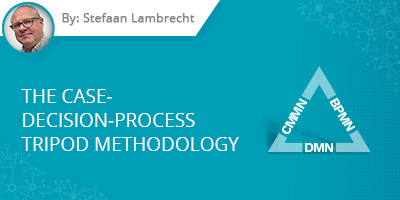
Since the emergence of DMN (Decision Model and Notation) as a universal decision modeling standard just over ten years ago, business architects are finally having a structured methodology to seamlessly integrate decision logic in process logic (BPMN).
(Decisions = Do the Right Things)
+(Process Flow = Do the Things Right)
=(Operational Excellence = Do the Right Things Right)
Whereas DMN and BPMN are often discussed together, they are regularly confused. That’s understandable: they frequently appear in the same automation initiatives and are executed by the same platforms. But they serve fundamentally different purposes.
A simple way to think about it:
- BPMN answers: When, in what order, and by whom does work happen?
- DMN answers: What decision should be made, based on which rules, data, and policies?
Processes orchestrate work. Decisions determine outcomes. And together they form the ideal tandem towards operational control and excellence.
A helpful metaphor:
- DMN is the steering wheel – it determines direction.
- BPMN is the engine and drivetrain – it provides motion and execution.
You can have a powerful engine, but without clear steering, you will not reach the right destination.
Changing a process step might improve efficiency. Changing a decision rule can change the business itself.
BPMN: the orchestration of work
What BPMN is responsible for
BPMN focuses on flow:
- Sequencing of activities
- Coordination between people, systems, and services
- Timing, events, and exceptions
- Handoffs, approvals, and escalations
A BPMN model describes how work moves through the organization. It answers questions such as:
- What happens first, next, and last?
- Who performs each task?
- What happens if something goes wrong?
- How do systems and humans interact?
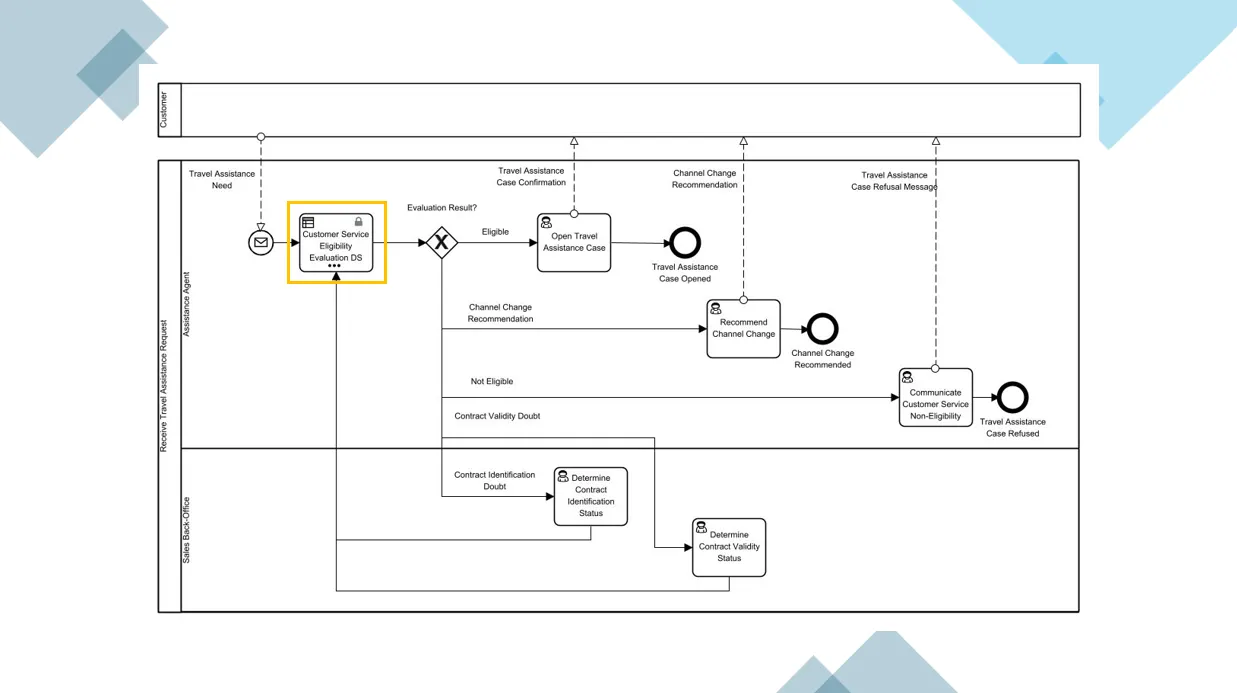
Business Process (BPMN) calling a Decision Service (DMN)
What BPMN deliberately does not focus on
BPMN is not designed to express complex business logic clearly. While you can embed rules in gateways or scripts, doing so quickly leads to:
- Hard-to-read process diagrams
- Logic scattered across multiple models
- Tight coupling between flow and policy
- Painful maintenance when rules change
In short, BPMN is excellent at execution of work, but weak at expressing decision logic.
DMN: the logic behind the decision
What DMN is responsible for
DMN focuses on decision-making:
- Business rules and policies
- Decision criteria and conditions
- Required input data and dependencies
- Transparency and explainability
A DMN model describes what decision is made and why. It answers questions such as:
- What factors influence this decision?
- How do policies translate into rules?
- Which data is required?
- How can we explain or justify the outcome?
DMN introduces clear structures like:
- Decision Requirements Diagrams (DRDs) to show decision dependencies
- Decision tables to express rules unambiguously
- Business-friendly logic that domain experts can validate
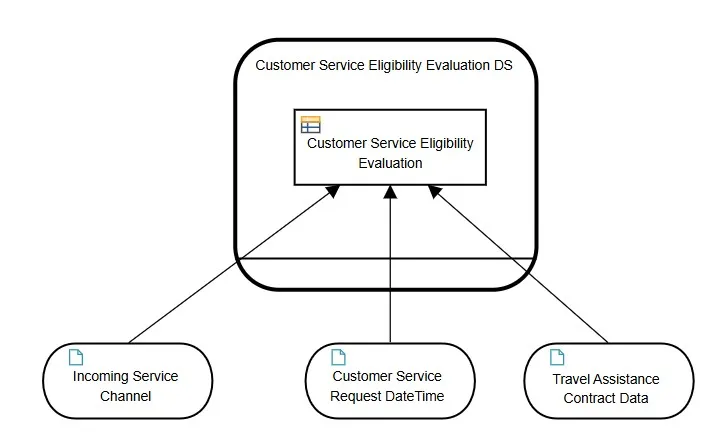
DMN Decision Logic - Decision Requirements Diagram
DMN speaks the language of the business
Unlike technical rule engines of the past, DMN is explicitly designed so that:
- Business experts can read the logic
- Policy owners can validate it
- Changes can be discussed without diving into code
This is not accidental—it is central to DMN’s purpose.
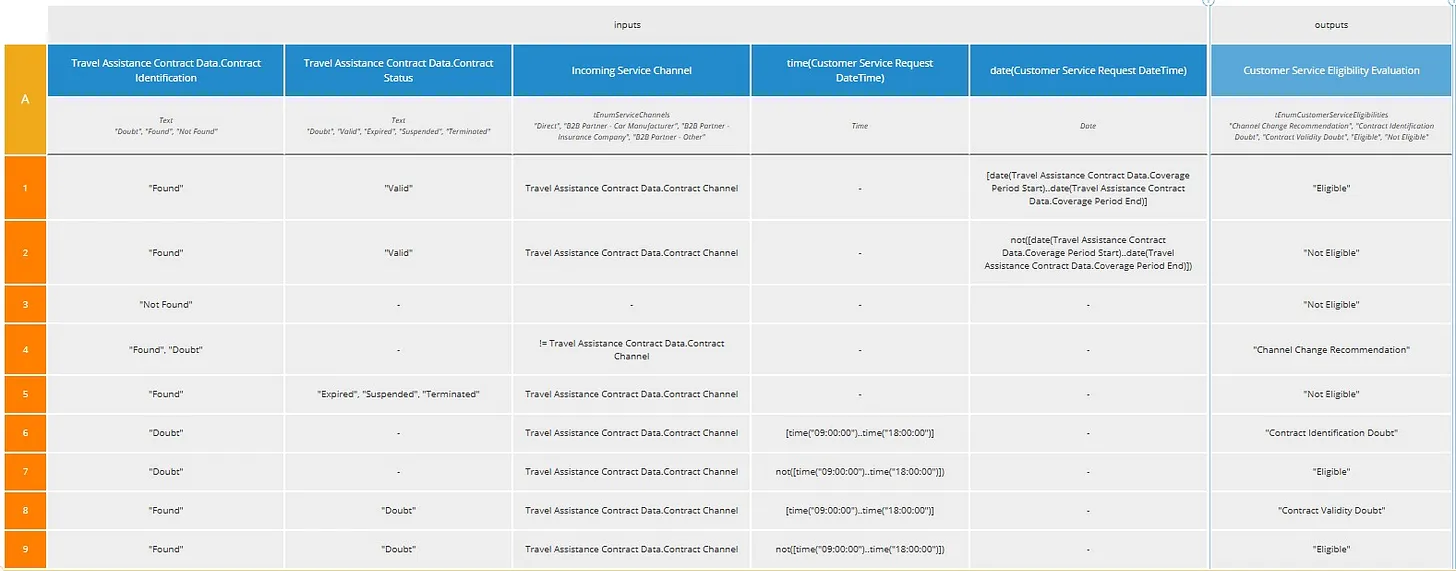
DMN Decision Logic - Decision Table determining Customer Service Eligibility
The power of combining DMN and BPMN correctly
When used together as intended:
- BPMN calls DMN for decisions instead of embedding logic
- Decision models remain reusable across multiple processes
- Policy changes do not require process redesign
- Business and IT collaborate around a shared, explicit model
This leads to:
- Faster change
- Lower risk
- Better alignment with strategy
- Greater transparency and trust in automated outcomes
Common anti-patterns: where things go wrong
Despite good intentions, many organizations fall into predictable traps when combining processes and decisions. These anti-patterns dilute accountability, slow change, and obscure the very logic that matters most.
1. Decision logic hidden in BPMN gateways
One of the most common anti-patterns is encoding business rules directly in BPMN gateways using complex conditions or scripts.Why it happens
It feels quick and convenient - Modeling tools allow it - The logic appears close to the flow
Why it’s harmful
Rules become scattered across multiple process models - Changes require process redesign and redeployment - Business stakeholders can no longer read or validate the logic - The process model becomes unreadable and brittle.
Gateways should route based on decisions, not be the place where decisions are made.2. Treating decisions as “just another service task”
Another anti-pattern is hiding decision logic inside opaque service tasks or application code, labeled vaguely as “Evaluate rules” or “Apply policy”.
Why it happens
Legacy rule engines or custom code already exist - Teams prioritize technical execution over transparency
Why it’s harmful
Decisions are no longer explicit or explainable - Policy ownership shifts from business to IT by default - Auditing, compliance, and impact analysis become difficult or impossible
If a decision matters to the business, it deserves a first-class model, not a black box.
3. One process, one decision model
Some teams tightly couple a DMN model to a single BPMN process, assuming it will never be reused.
Why it happens
Early success with a narrow use case - Process-centric thinking dominates
Why it’s harmful
The same decision logic is reimplemented in multiple places - Inconsistencies emerge across channels and products - Strategic decisions lose coherence at scale
Key business decisions usually cut across products, channels, and journeys. DMN models should reflect that reality.
4. Optimizing processes while ignoring decisions
Organizations often invest heavily in process optimization—automation, straight-through processing, cycle-time reduction—while leaving decision logic untouched.
Why it happens
Process KPIs are visible and easy to measure - Decision quality is harder to quantify
Why it’s harmful
Inefficient or outdated policies are executed faster - Customer frustration is amplified, not reduced - Strategic misalignment is locked in.
Speed without direction is not progress.
Top 10 strategic decisions every enterprise should govern explicitly
Not all decisions deserve the same level of attention. Governance effort should focus on high‑leverage decisions—those that directly translate mission, vision, and policy into large‑scale, repeatable outcomes.
The following ten decision types consistently qualify as strategic steering decisions across industries.
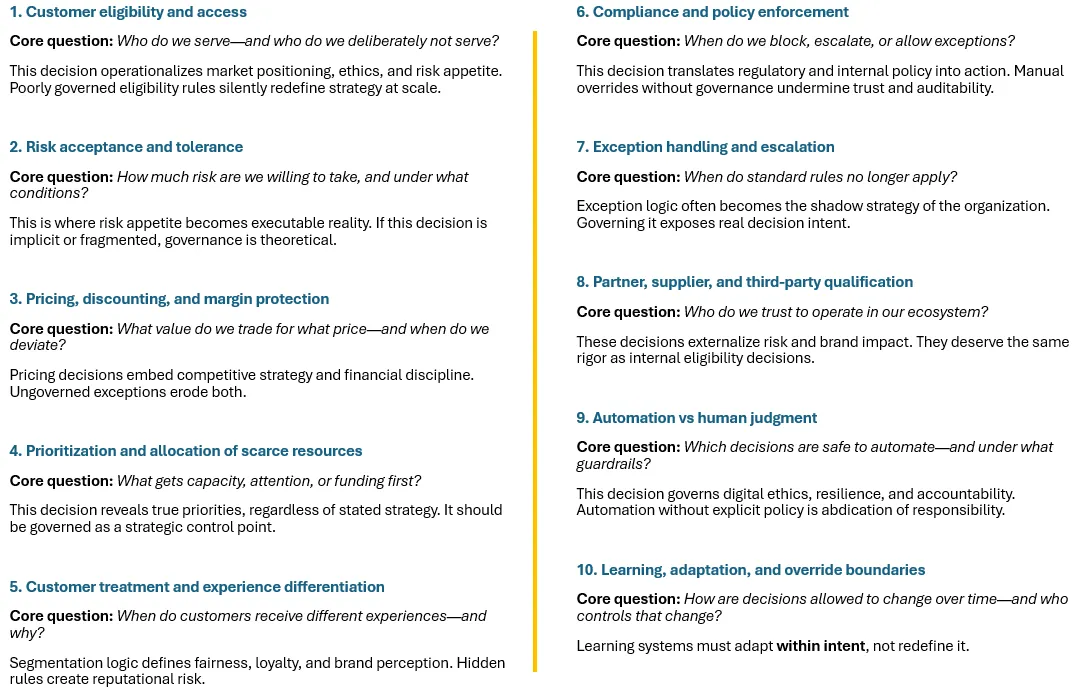
Final Thoughts
Processes answer how work gets done. Decisions answer why a specific outcome occurs.
If BPMN is about operational excellence, DMN is about organizational intent made executable.
In modern enterprises, sustainable advantage does not come from faster processes alone—but from better decisions, consistently applied, and clearly owned by the business.
That is why decision logic deserves center stage.
Follow Stefaan Lambrecht on his website.


































































Learn how it works
Request DemoConfirm your budget
Request PricingDiscuss your project
Request Meeting