
A patient's care plan is a simple concept. However, it may not be simple to implement and can have different meanings for different users.
It may be perceived differently due to:
- The role of the person interacting with the plan (physician, nurse, administrator, payer, patient, etc)
- The technology used to create and distribute the plan.
- Its complexity.
- The acuity of care.
- The expected time span for its use.
If you are trying to find a technological solution for your care planning, then the solution must be robust enough to meet the various needs of different users and scenarios.
Care plans historically have had some limitations.
- They may not reflect the latest evidence-based recommendations
- They may not reflect the patient's current status.
- They may be siloed based on specialty or care location.
- They may not be inclusive for all of the patient's needs.
- They may not incorporate a patient's preferences.
- They may be difficult to orchestrate between multiple providers and locations.
- They may not be understood by patients due to language, cultural or other barriers.
Because of these limitations people look to technology to make improvements.
Can Tech Be Used to Improve Care Plans?
The short answer is "Yes". Many approaches are being tried, some being more successful than others.
- Large language models can access clinical practice guidelines and other evidence-based resources to extract core elements driving care. Health-specific resources such as OpenEvidence can generate very credible care plans after entering a patient record.
- Many resources that may be used in care plans (scheduling, workflows, resource allocation) are accessible online, streamlining previously manual tasks.
- Online EHRs have given improved access to all sorts of patient data. The HL7 FHIR care plan resource has made exchange of care plans feasible.
However, all of these solutions face challenges. Confidentiality and security are constantly being challenged. Large language models can do amazing things, but sometimes can cause errors that can be hard to identify. Finally, many solution still rely on some manual processing, reducing efficiency. Automation that can bring all of the benefits while controlling weaknesses would have a impact.
Are BPM+ Tools the Right Tech for the Job?
Modeling tools have many advantages.
- They are deterministic.
- They can be audited and traced.
- They do not consume tokens (an unknown cost variable in the future)
- They can call LLM as a service when most useful.
- They support automation.
- They can provide orchestration.
- They can be secure.
Each of the available modeling tools provides certain benefits to developers:
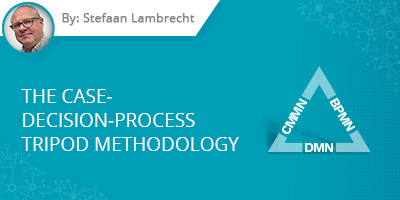
- Case Management (CMMN) allows management of the patient and problems over time.
- Process (BPMN) brings process automation with assignment of responsibilities.
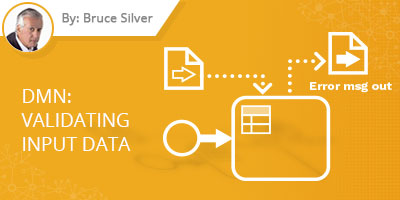
- Decisions (DMN) provides decision logic useful in triage and routing that can be tested and verified.
- Shared data (SDMN) simplifies connection of models to FHIR resources.
Claude and other LLMs have the ability to create BPMN and DMN models from documents if suitable skills are used. This reduces one of the barriers to the use of models in healthcare, making models easier to create and modify, speeding development.
Conclusions
Care planning is essential for healthcare. The use of care plans has faced many challenges, but newer technologies can enhance both creation of plans and their execution, improving healthcare delivery and efficiency. Choosing the right technology can make all the difference.

























Learn how it works
Request DemoConfirm your budget
Request PricingDiscuss your project
Request Meeting