Resources
COVID‑19 Clinical Pathways

Get instant access to free applications and to models used to create sharable clinical pathways for COVID‑19 management.
Try our free apps below to find out your risk level and to get appropriate recommendations by simply answering a few questions about your general condition, symptoms and travel.
Please note that these COVID‑19 tools are for educational purposes and do not represent a medical assessment. If you are experiencing severe symptoms, seek medical attention or call 911. These tools are not a substitute for consulting with a doctor.







COVID‑19 Automatable Guidelines
With the coronavirus pandemic rapidly evolving, healthcare workers in the trenches need to efficiently and effectively diagnose and treat COVID‑19. Evidence-based content and best practices related to COVID‑19 are appearing and changing every day. Using Trisotech Digital Modeling Suite it is possible to very rapidly capture this constantly evolving knowledge with simple to understand visual models known as Automatable Guidelines. These Decision and Course of action Models not only unambiguously communicate the best practices, they are directly automatable using Trisotech Digital Automation Suite. If you want to find out more on this innovative technology please contact us.
Knowledge Models
Guidelines on the Management of Critically Ill Adults with Coronavirus Disease 2019 (COVID‑19)
Recommendations issued from a panel of 36 experts from 12 countries to help support healthcare workers caring for critically ill ICU patients with COVID-19.
References
Surviving Sepsis Campaign: Guidelines on the Management of Critically Ill Adults with Coronavirus Disease 2019 (COVID‑19) ncbi.nlm.nih.gov/pubmed/32222812
Read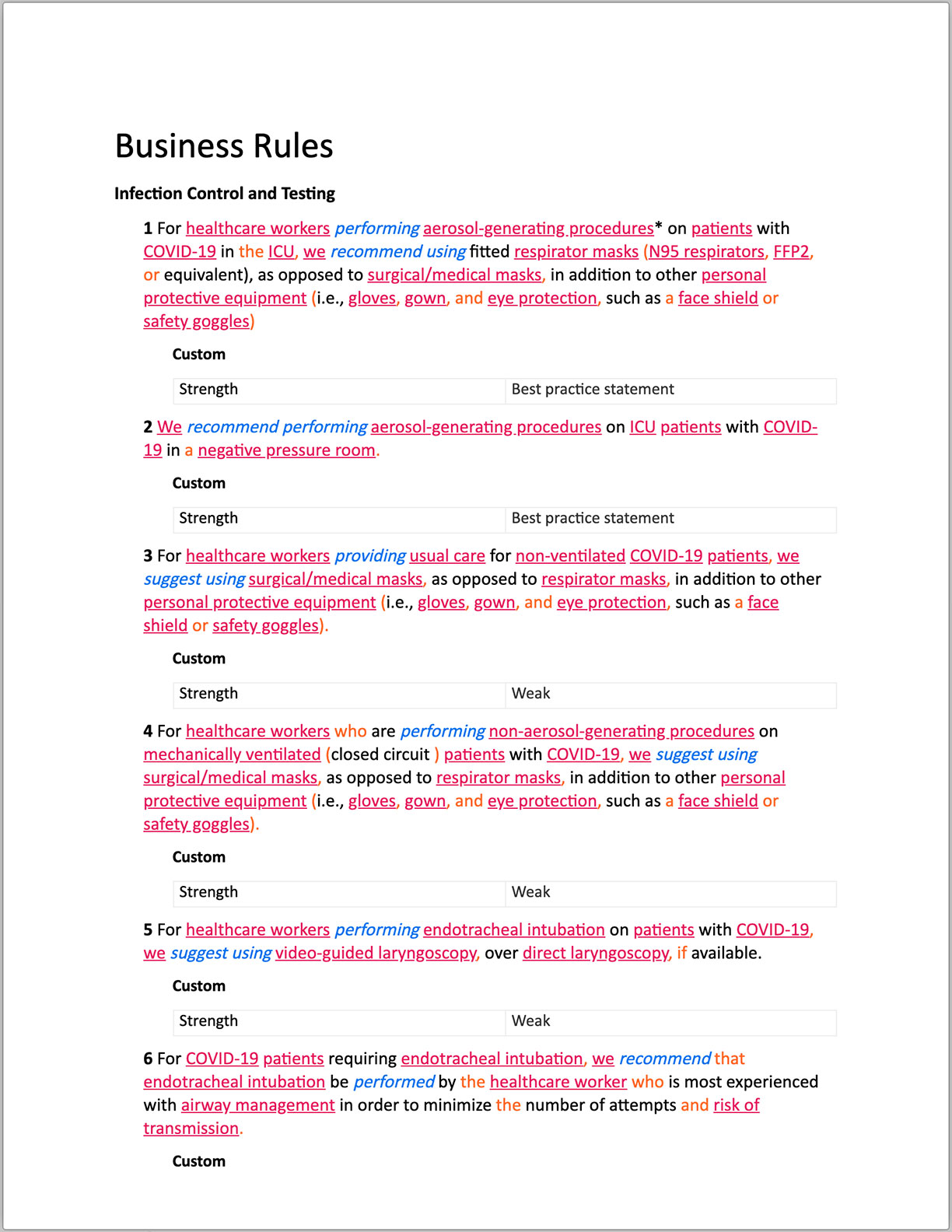
Decision Models
Acute Respiratory Infection
An Acute Respiratory Infection (ARI) is diagnosed when certain findings are present. It is considered severe (SARI) if the patient requires hospitalization.
References
World Health Organization. Clinical management of severe acute respiratory infection when Novel coronavirus (2019-nCoV) is suspected. Interim guidance. 2020. WHO/bCoV/Clinical/2020.2
Read Run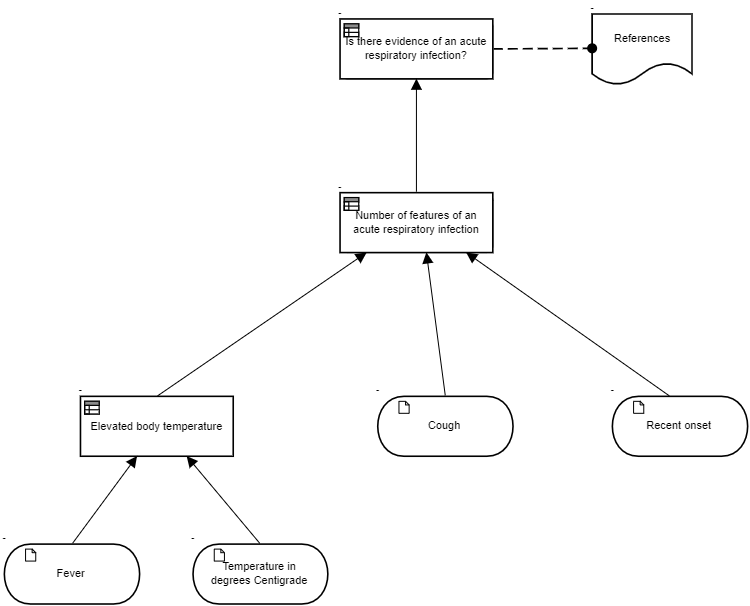
ARDS Berlin Definition
The ARDS Definition Task Force developed a definition for Adult Respiratory Distress Syndrome (ARDS) in Berlin in 2011. This involved the European Society of Intensive Care Medicine, the American Thoracic Society and the Society of Critical Care Medicine.
References
The ARDS Definition Task Force. Acute Respiratory Distress Syndrome. The Berlin Definition. JAMA. 2012; 307: 2526-2533.
Read Run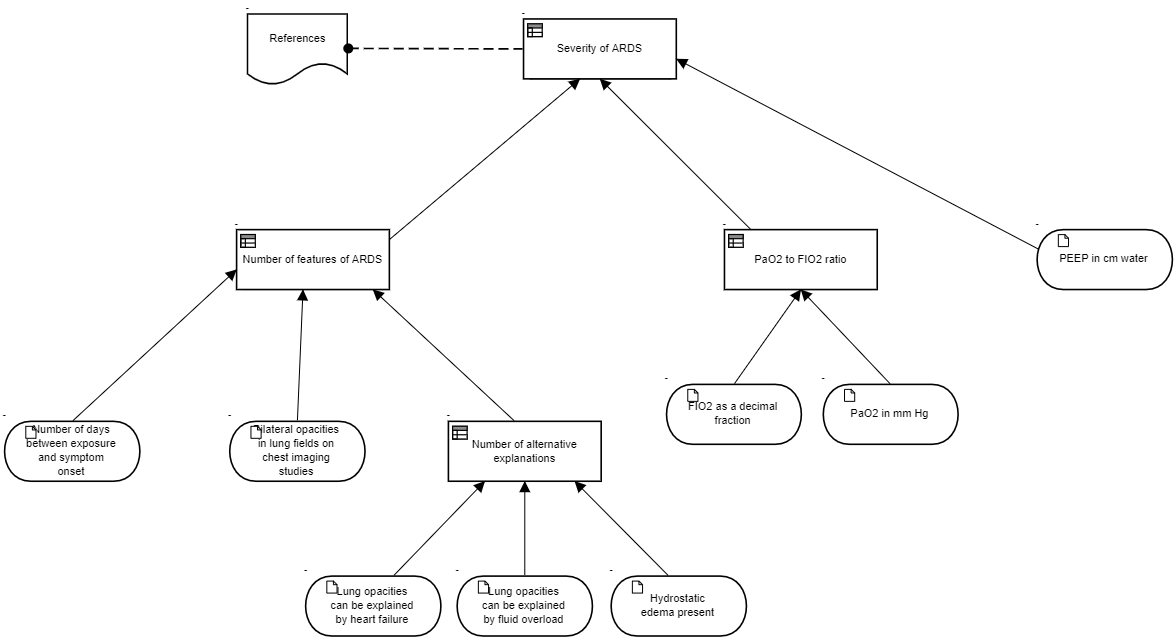
Arterial pH Target Brigham Womens
The target for the arterial pH is to maintain a range from 7.30 to 7.45. Changes in the respiratory rate is often the first step to change the pH when needed.
References
Read Run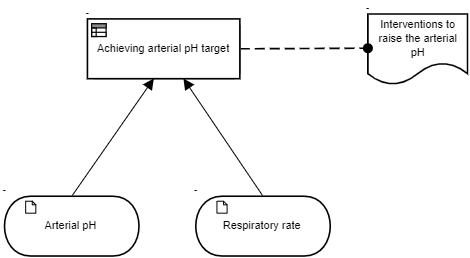
Close Contact to a Respiratory Infection
The risk of acquiring a communicable respiratory infection increases if a person comes into close contact with an infected patient.
References
Centers for Disease Control and Prevention. Interim guidance for healthcare professionals. 2019 Novel Coronavirus.
Centers for Disease Control and Prevention. Interim guidance for risk assessment and public health management of persons with potential 2019 novel coronavirus (2019-nCoV) exposure in travel-associated or community settings.
Read Run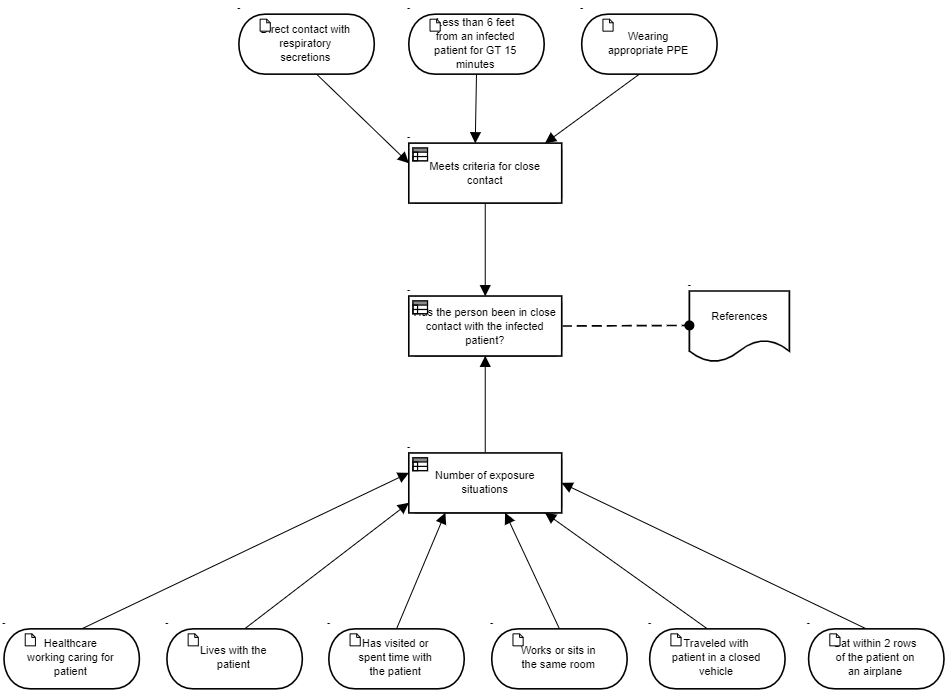
COVID19 Adult Mortality Model Zhou
Zhou et al developed a simple model for predicting in-patient mortality of a patient with COVID-19. This can help to identify a patient who may benefit from more aggressive management. The authors are from multiple institutions in China.
References
Zhou F, Yu T, et al. Clinical course and risk factors for mortality of adult inpatients with COVID-19 in Wuhan, China: a retrospective cohort study. Lancet. 2020. doi: 10.1016/S0140-6736(20)30566-3.
Read Run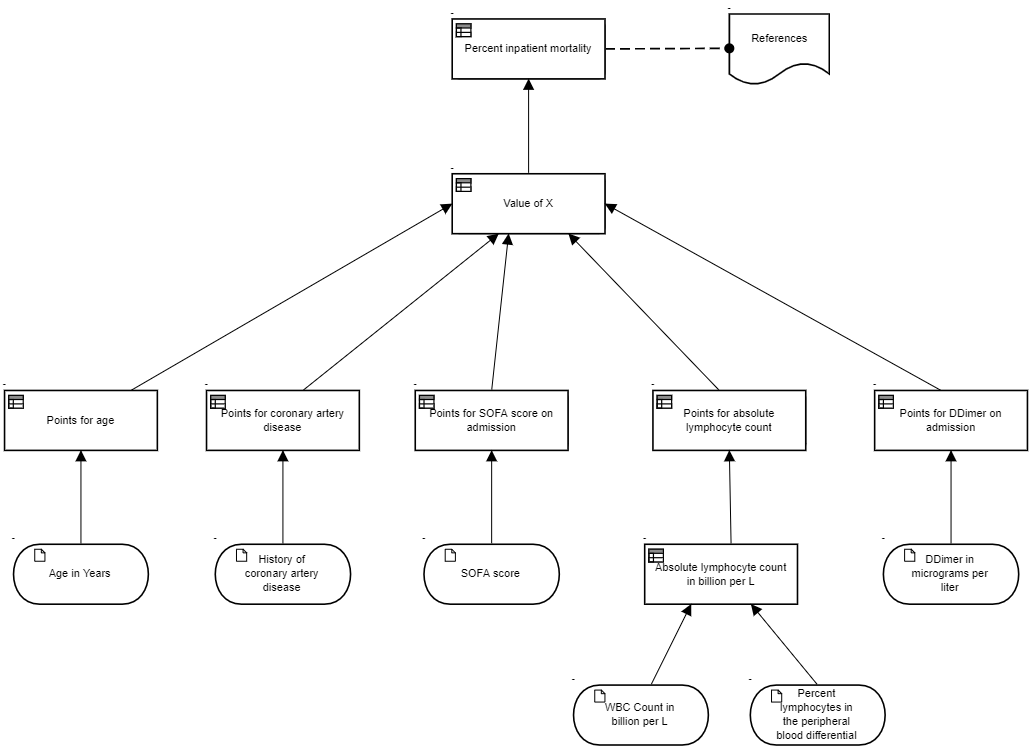
COVID19 Clinical Findings
Infection with the 2019 Novel Coronavirus (2019-nCoV) shows a number of clinical findings shared with SARS and MERS.
References
Chen N, Zhou M, et al. Epidemiological and clinical characteristics of 99 cases of 2019 novel coronavirus pneumonia in Wuhan, China: a descriptive study. Lancet. 2020. doi: 10.1016/S0140-6736(20)30211-7.
Holshue ML, DeBolt C, et al. First case of 2019 novel coronavirus in the United States. N Engl J Med. 2020. doi: 10.1056/NEJMoa2001191.
Huang C, Wang Y, et al. Clinical features of patients infected with 2019 novel coronavirus in Wuhan, China. Lancet 2020. doi: 10.1016/S0140-6736(20)30183-5.
Li Q, Guan X, et al. Early transmission dynamics in Wuhan, China, of novel coronavirus-infected pneumonia. N Engl J Med. 2020. doi: 10.1056/NEJMoa2001316
World Health Organization. Clinical management of severe acute respiratory infection when novel coronavirus (2019-nCoV) infection is suspected. WHO/nCoV/Clinical/2020.2
Read Run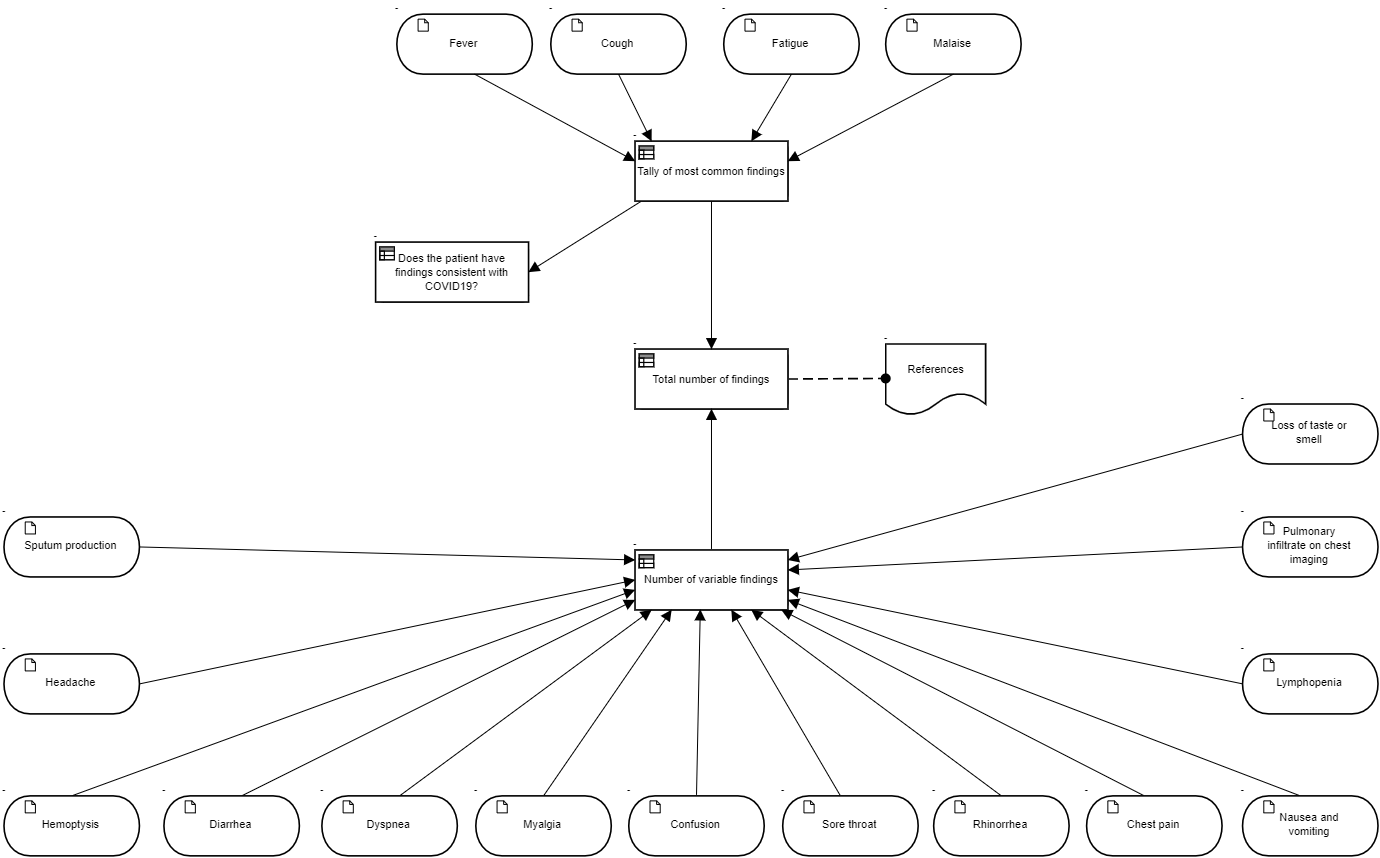
COVID19 Clinical Stages of Siddiqi
Siddiqi and Mehra reported clinical stages for the progression of a COVID19 Infection.
References
Siddiqi HK, Mehra MR. COVID-19 illness in native and immunosuppressed states: A clinical-therapeutic staging proposal. J Heart Lung Transplantation. 2020.
Read Run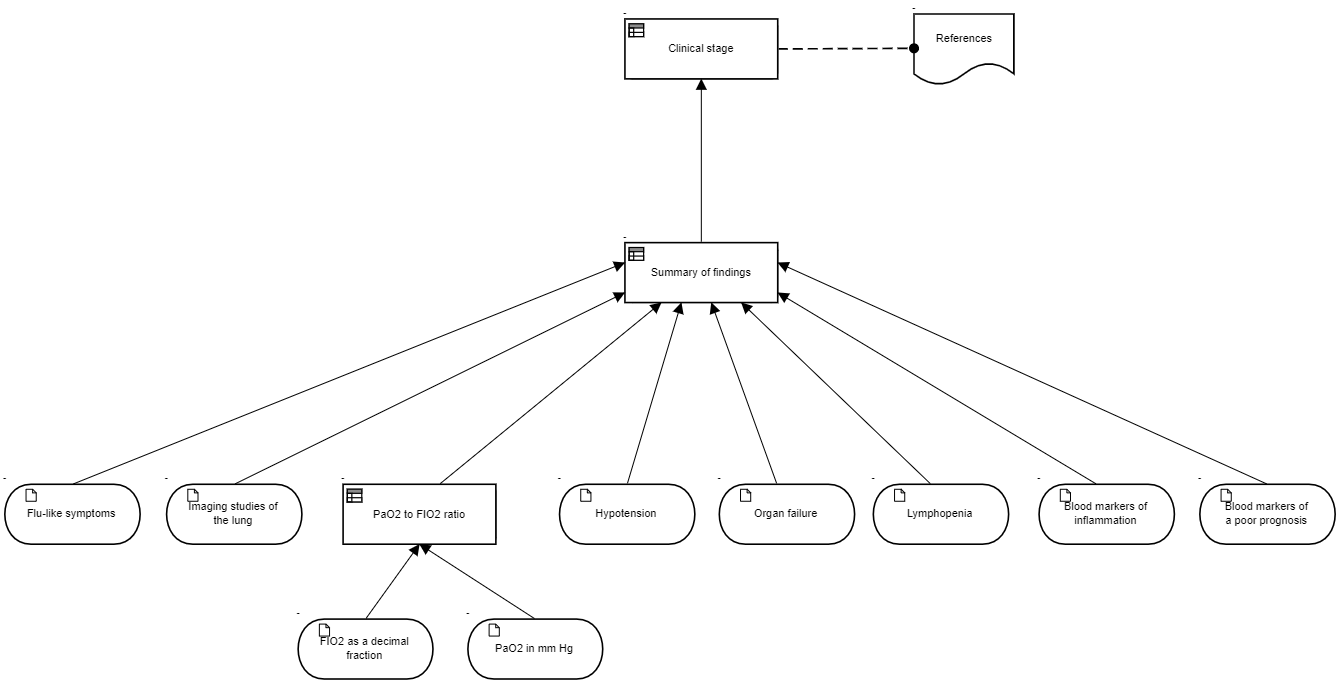
COVID19 Critical Illness Model Petrilli
Petrilli et al evaluated patients with COVID-19 who required critical care. They identified risk factors that can help to identify a patient who may require more aggressive management. The authors are from New York University in New York City.
References
Petrilli CM, Jones SA, et al. Factors associated with hospitalization and critical illness among 4.103 patients with Covid-19 disease in New York City. 2020 medRxiv preprint. doi.org: 10.1101/2020.04.08.20057794.
Read Run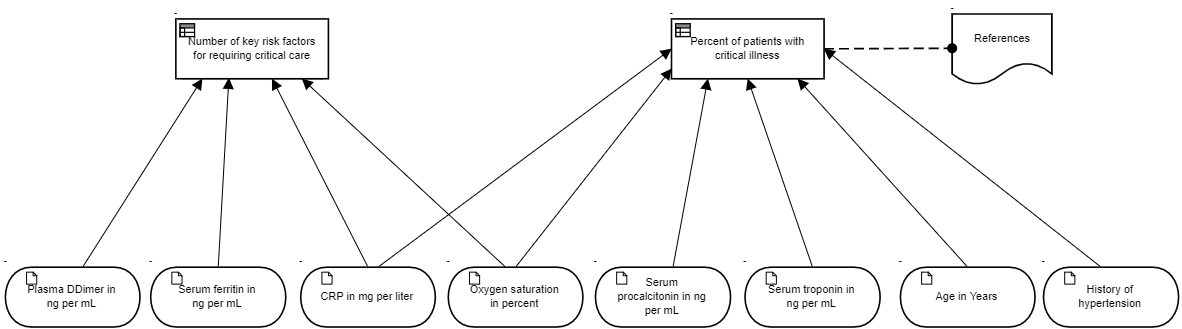
COVID19 Exposure Risk
The risk of being exposed to COVID-19 depends on a number of factors.
References
Centers for Disease Control and Prevention. Interim US Guidance for risk assessment and public health management of persons with potential 2019 novel coronavirus (2019-nCoV) exposure in travel-associated or community settings. 2020.
Read Run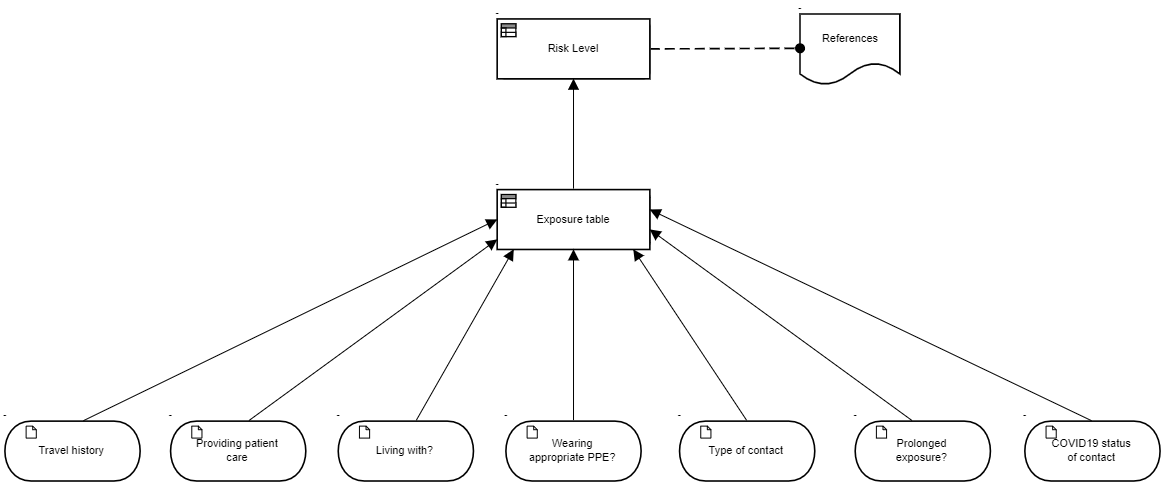
COVID19 Lab Findings Poor Prognosis Brigham Womens
A number of laboratory findings are associated with a poor prognosis for a patient with COVID19. These reflect high risk complications (ARDS, multi-organ failure, DIC, myocarditis, cytokine release, etc).
References
Yan L, Zhang H-T, et al. Prediction of criticality in patients with severe Covid-19 infection using three clinical features: a machine learning-based prognostic model with clinical data in Wuhan. 2020. doi: 10.1101/2020.02.27.20028027. medRxiv.org
Zhou F, Yu T, et al. Clinical course and risk factors for mortality of adult inpatients with COVID-19 in Wuhan, China: a retrospective cohort study. Lancet. 2020. doi: 10.1016/S0140-6736(20)30566-3.
Read Run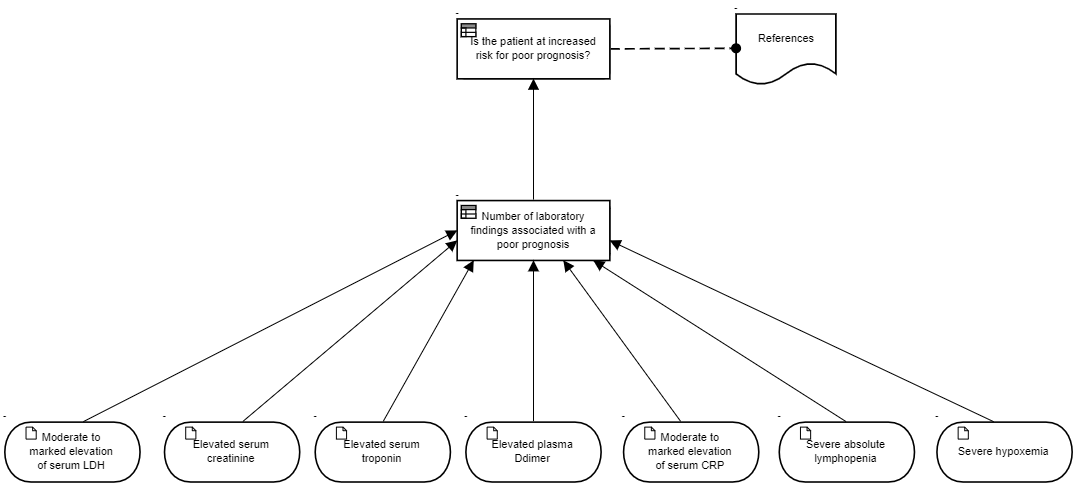
COVID19 Model of Yan for Mortality
Yan et al reported a prognostic model for a patient with COVID19 in Wuhan, China, based on laboratory testing.
References
Yan L, Zhang H-T, et al. Prediction of criticality in patients with severe Covid-19 infection using three clinical features: a machine learning-based prognostic model with clinical data in Wuhan. 2020. doi: 10.1101/2020.02.27.20028027. medRxiv.org
Read Run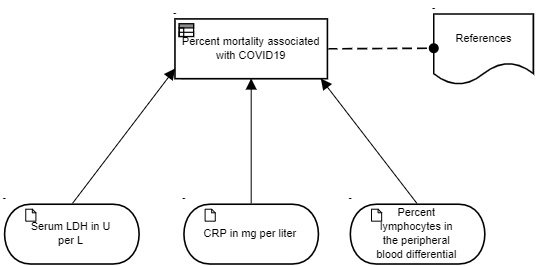
COVID19 Patient Risk for Fatal Disease simplified
The risk for mortality associated with a COVID-19 infection increases with age and comorbid conditions.
References
Clinical predictors of mortality due to COVID-19 based on an analysis of data of 150 patients from WRuan Q, Yang K, et al. uhan, China. Intensive Care Medicine. doi: 10.1007/s00134-020-05991-x
Read Run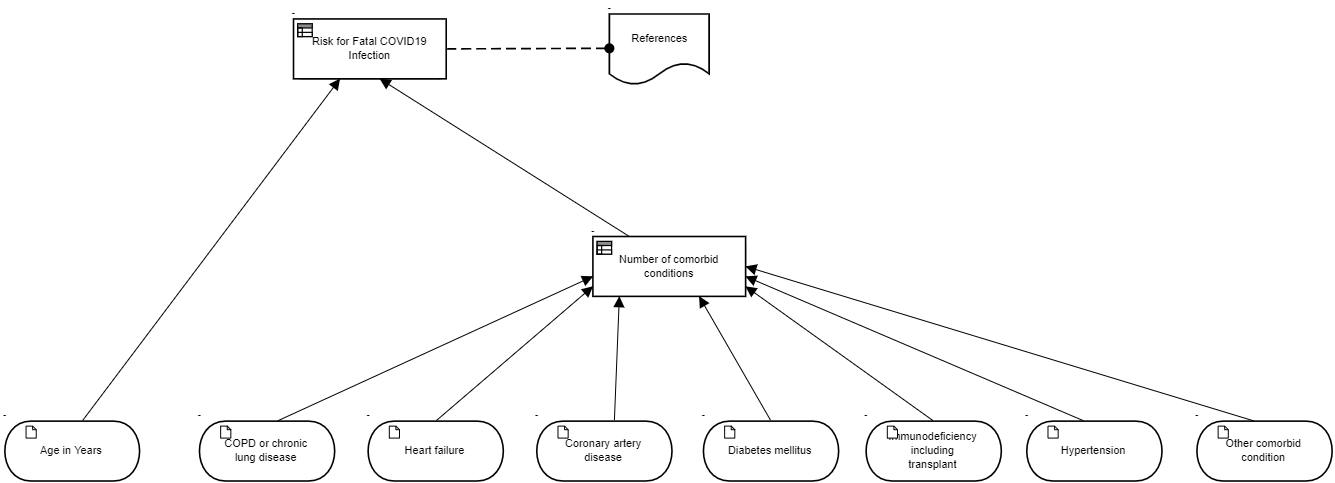
COVID19 Patient Risk for Fatal Disease
The risk for mortality associated with a COVID-19 infection increases with age and comorbid conditions.
References
Clinical predictors of mortality due to COVID-19 based on an analysis of data of 150 patients from WRuan Q, Yang K, et al. uhan, China. Intensive Care Medicine. doi: 10.1007/s00134-020-05991-x
Read Run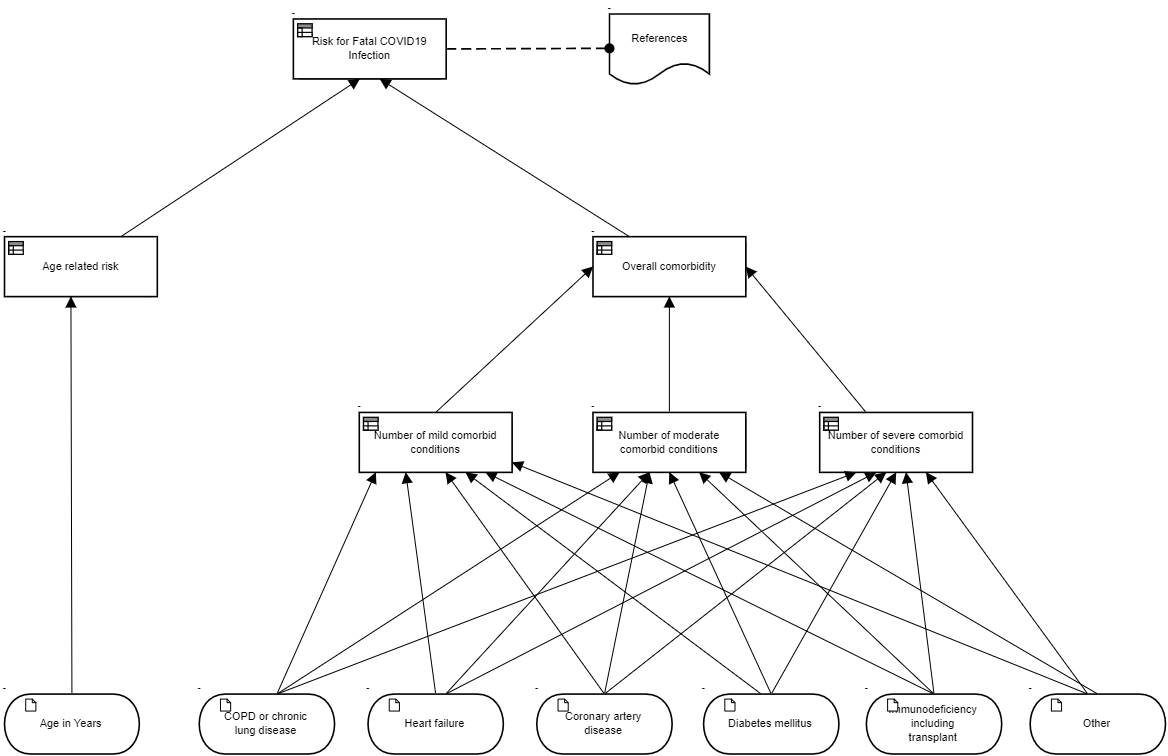
COVID19 Restrictions
The level of risk for exposure to COVID19 determines the level of restrictions placed on the patient.
References
Centers for Disease Control and Prevention. Interim US Guidance for risk assessment and public health management of persons with potential 2019 novel coronavirus (2019-nCoV) exposure in travel-associated or community settings. 2020.
Read Run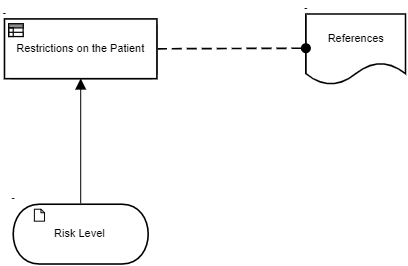
COVID19 Severe Disease
Infection with the 2019 Novel Coronavirus (2019-nCoV, COVID-19) may show a number of complications, some of which can be fatal.
References
Chen N, Zhou M, et al. Epidemiological and clinical characteristics of 99 cases of 2019 novel coronavirus pneumonia in Wuhan, China: a descriptive study. Lancet. 2020. doi: 10.1016/S0140-6736(20)30211-7.
Holshue ML, DeBolt C, et al. First case of 2019 novel coronavirus in the United States. N Engl J Med. 2020. doi: 10.1056/NEJMoa2001191.
Huang C, Wang Y, et al. Clinical features of patients infected with 2019 novel coronavirus in Wuhan, China. Lancet 2020. doi: 10.1016/S0140-6736(20)30183-5.
Li Q, Guan X, et al. Early transmission dynamics in Wuhan, China, of novel coronavirus-infected pneumonia. N Engl J Med. 2020. doi: 10.1056/NEJMoa2001316
World Health Organization. Clinical management of severe acute respiratory infection when novel coronavirus (2019-nCoV) infection is suspected. WHO/nCoV/Clinical/2020.2
Read Run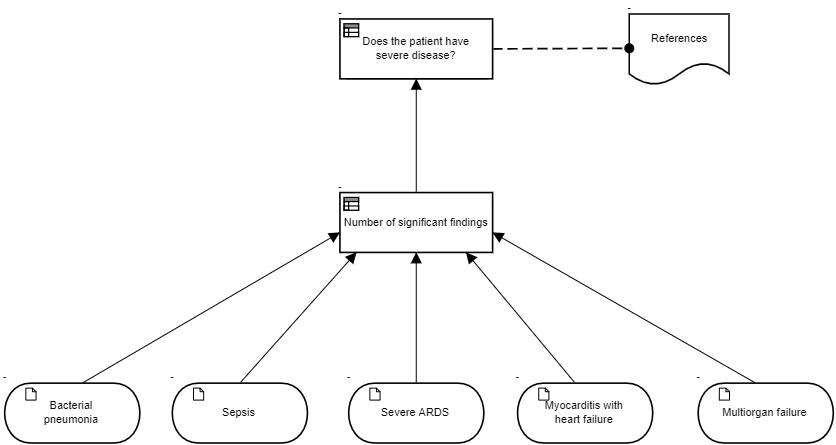
COVID19 Triage to ICU Brigham Womens
A patient with COVID19 should be triaged for ICU admission early if certain findings are present.
References
Brigham and Women's Hospital COVID-19 Critical Care Clinical Guidelines. covidprotocols.org
Read Run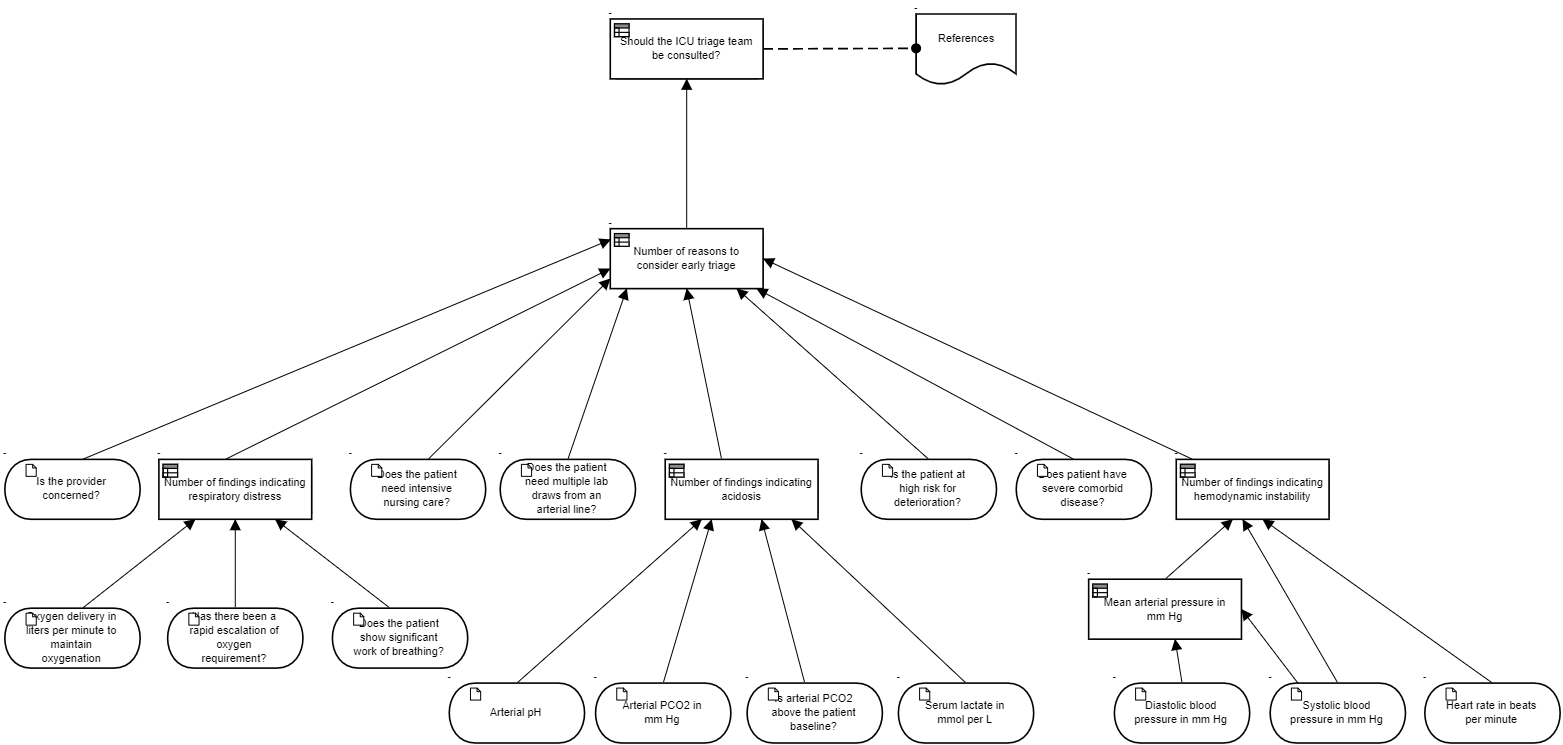
Cytokine Release Syndrome Grading System Lee
Lee et al reported a grading system for the Cytokine Release Syndrome (CRS). The authors are from the National Cancer Institute, Seattle Children's Hospital, University of Pennsylvania, Texas Children's Hospital and Children's Hospital of Philadelphia.
References
Lee DW, Gardner R, et al. Current concepts in the diagnosis and management of cytokine release syndrome. Blood. 2014; 124: 188-193.
Riegler LL, Jones GP, Lee DW. Current approaches in the grading and management of cytokine release syndrome after chimeric antigen receptor T-cell therapy. Therapeutics and Risk Management. 2019; 15: 323-335
Read Run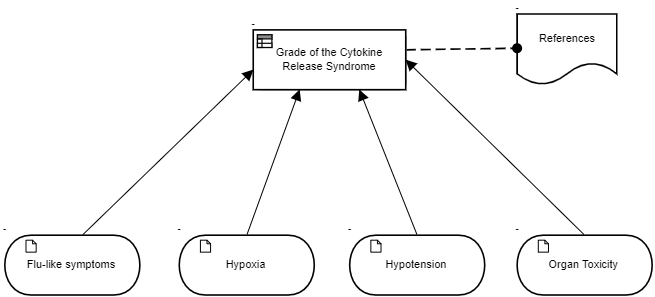
DIC Criteria ISTH
The Subcommittee on DIC for the Scientific and Standardization Committee (SSC) of the International Society on Thrombosis and Haemostasis (ISTH) has developed a definition and scoring algorithm for disseminated intravascular coagulation (DIC).
References
Ha SO, Park SH, et al. Performance evaluation of five differentiated disseminated intravascular coagulation (DIC) diagnostic criteria for predicting mortality in patients with complicated sepsis. J Korean Med Sci. 2016; 31: 1838-1845.
Levi M. Disseminated Intravascular Coagulation: New diagnostic criteria and supportive treatment strategies. 47th Scientific and Standardization Committee Meeting of the International Society on Thrombosis and Haemostasis. July 6-7, 2001. Paris, France. Medscape Cardiology. 2001. www.medscape.com. Accessed 08/22/2001.
Taylor FB Jr, Toh CH, et al. Towards definition, clinical and laboratory criteria, and a scoring system for disseminated intravascular coagulation. Thromb Haemost. 2001; 86: 1327-1330.
Read Run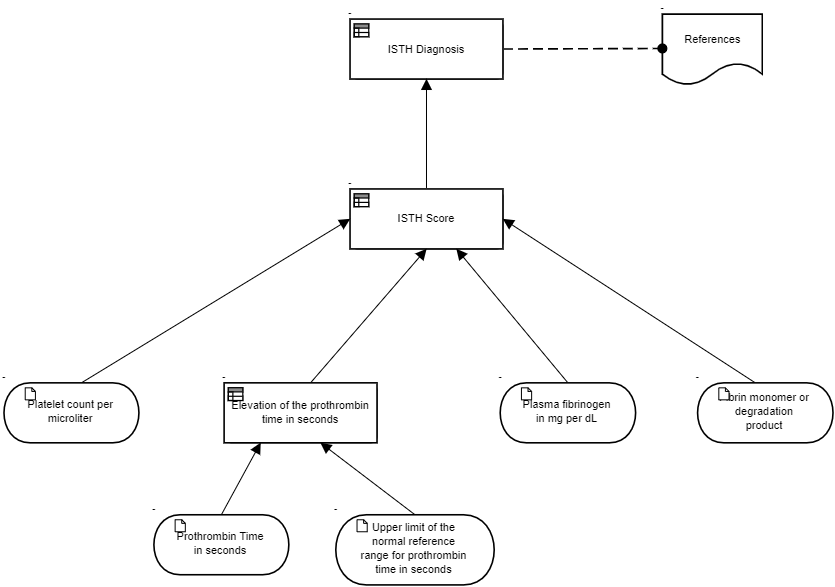
Initial FIO2 and PEEP Brigham and Womens
The initial FIO2 and PEEP for a patient on mechanical ventilation can be based on the ARDS Network recommendations.
References
Acute Respiratory Distress Syndrome Network. Ventilation with lower tidal volumes as compared with traditional tidal volumes for acute lung injury and the acute respiratory distress syndrome. N Engl J Med. 2000; 342: 342: 1301-1308.
Read Run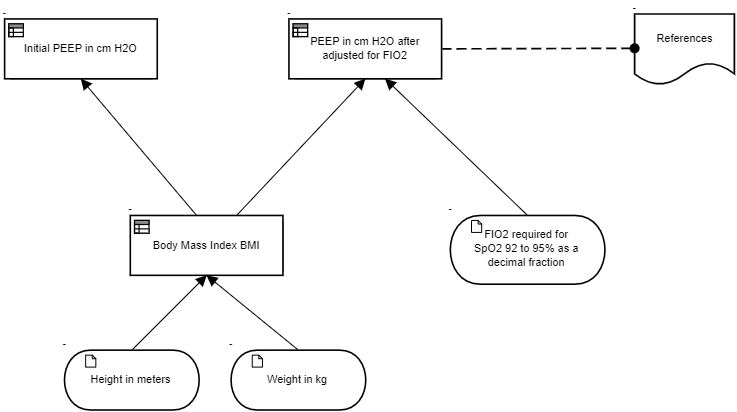
Tidal volume and Predicted Body Weight
The ratio of tidal volume to predicted body weight is used to adjust mechanical ventilation.
References
Robinson JD, Lupkiewicz SM, et al. Determination of ideal body weight for drug dosage calculations. Am J Hosp Pharm. 1983; 40: 1016-1019. 6869387
Read Run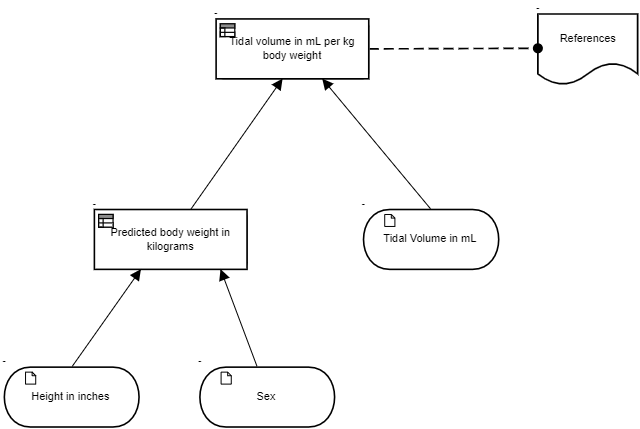
Course of action Models
Asymptomatic Suggested Follow Up
A patient who is asymptomatic after a possible exposure to the novel coronavirus should be monitored for signs and symptoms during the possible incubation period (up to 14 days after the exposure).
Read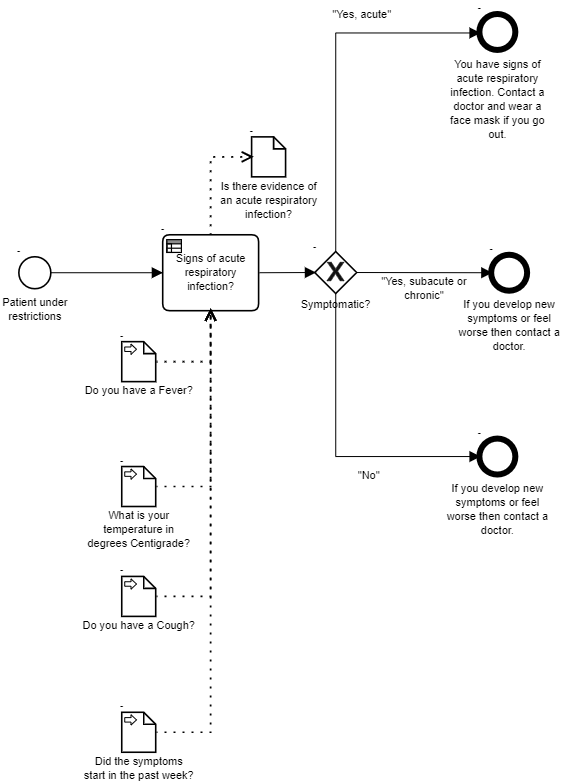
Asymptomatic Suggested Restriction
A patient who is asymptomatic after a possible exposure to the novel coronavirus should be monitored for signs and symptoms during the possible incubation period (up to 14 days after the exposure).
Read
Coronavirus Asymptomatic
A patient who is asymptomatic after a possible exposure to the novel coronavirus should be monitored for signs and symptoms during the possible incubation period (up to 14 days after the exposure).
Read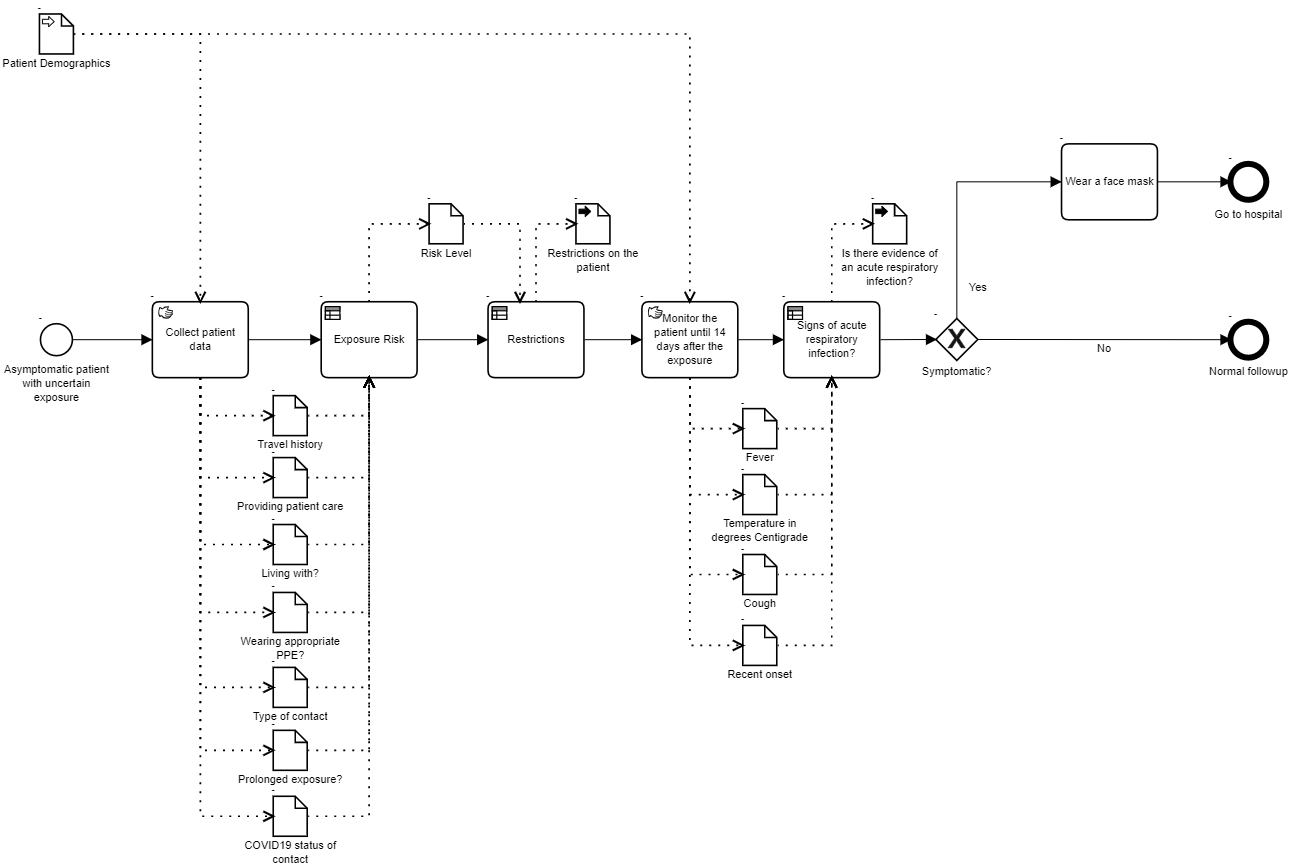
Coronavirus Lancet Flow Diagram
Zhang et al reported a flow diagram for managing a patient in a fever clinic faced with 2019 novel coronavirus (COVID-19).
Read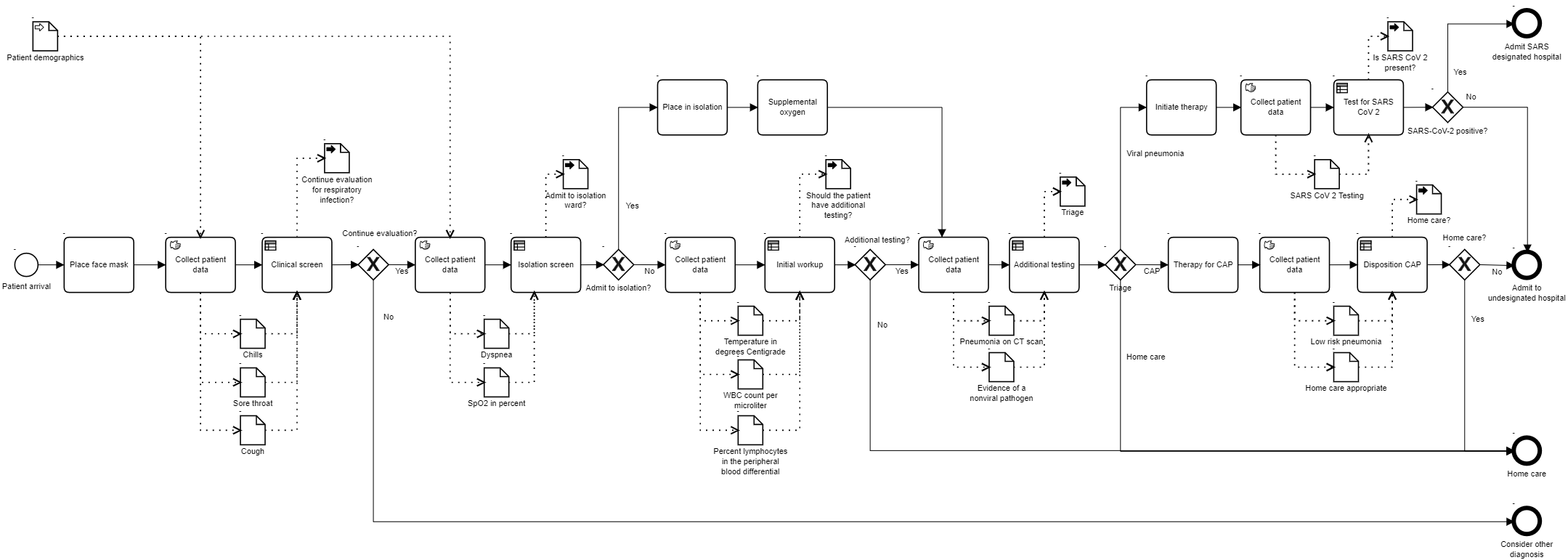
Coronavirus Symptomatic
A symptomatic patient who may have COVID19 needs to be managed according to the severity of the infection.
Read
COVID19 Quarantine Release
A person with COVID-19 can be released from quarantine/isolation if certain conditions are present. The patient should not be released if still infectious to others.
Read
ECMO Respiratory Failure Brigham Womens
Selected patients with severe respiratory failure may benefit from extracorporeal membrane oxygenation (ECMO) therapy.
Read
Refractory Hypoxemia Brigham Womens
Read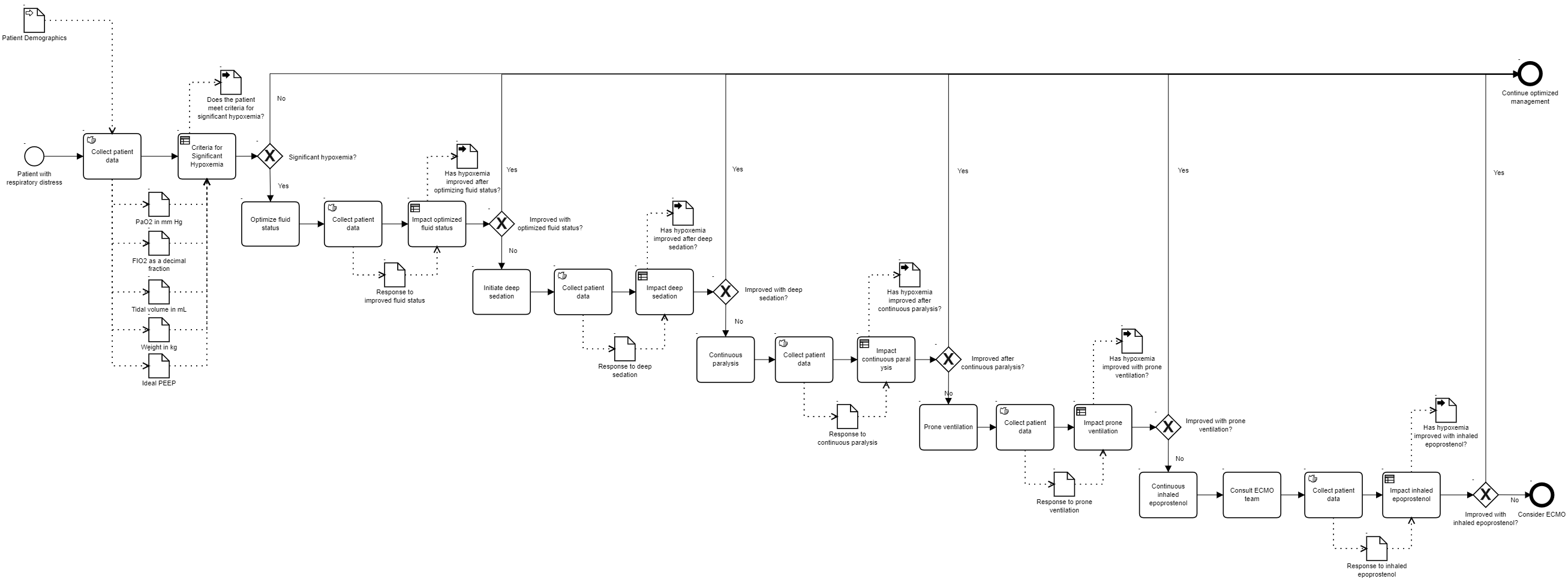
Symptomatic Suggested Action
A symptomatic patient who may have COVID19 needs to be managed according to the severity of the infection.
Read
Learn more about this innovative technology by watching these short webinars on the topic:
Trisotech
Webinars






Learn how it works
Request DemoConfirm your budget
Request PricingDiscuss your project
Request Meeting